
Retail design is no longer just about making the store look nice. It is one of the most powerful business tools you have to attract footfall, increase conversions, and build a memorable brand in the minds of customers. In today’s India, where shoppers compare offline and online experiences in seconds, a weak or outdated retail design can quietly drain the brand’s sales without even realizing it.
From cluttered shelves and confusing layouts to poor lighting and weak branding, there are many subtle signs that brand is ready for a stronger retail design strategy. A well-planned, professional approach can turn the store into a high-performing sales engine. Guiding customer movement, highlighting high value products, and making brand instantly recognizable.
As a specialized retail design agency, Shop Pros helps brands move beyond basic interiors and into strategic retail environments that are designed for footfall, dwell time, and conversions
Why a Strong Retail Design Strategy Matters[PI1]
A strong retail design agency’s strategy aligns the physical space with the brand’s business goals, not just aesthetic preferences.
When customers can easily navigate the store, find what they need, and enjoy the experience, they spend more time exploring and more money at the checkout.
When your store looks and feels consistent with your brand, it builds trust, recall, and loyalty, especially in competitive categories like fashion, electronics, beauty, or F&B.
Good retail design is also rooted in consumer psychology. Small choices like how wide your aisles are, how you place the billing counter, where you put your bestsellers, and which products appear at eye level can either support or block sales. A strong strategy uses layout, lighting, colour, and merchandising to guide behaviour, where customers walk, what they notice, what they touch, and what they finally buy.
Key Signs Your Brand Needs a Stronger Retail Design Strategy
Before jumping into services, it helps to check whether your current space is actually holding you back. Here are some common warning signals:
- Footfall is okay, but conversions are low
- Customers keep asking, “Where can I find…?”
- Your store looks different from your digital brand (website, social media, ads)
- Products feel cluttered or lost on the shelves
- Customers don’t spend much time inside they enter and exit quickly
- Billing area queues get chaotic during peak hours
- You struggle to highlight new launches or high margin products
- Lighting feels dim, harsh, or inconsistent
If you see yourself in two or more of these points, it’s a strong indicator that your brand needs a sharper, more strategic approach to retail design, not just another coat of paint.
Types of Retail Design Services That Turn a Store into a High-Performing Store
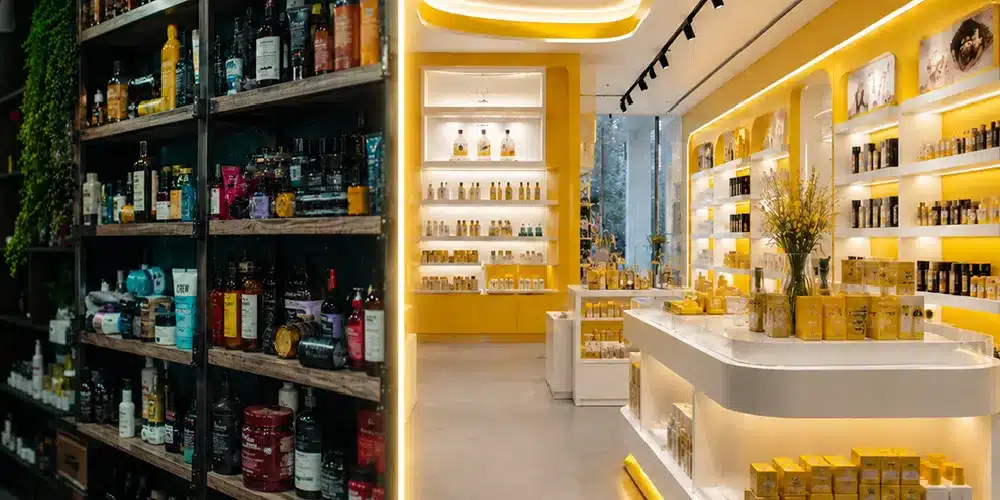
Store Layout Planning
The store layout is not just a floor plan. It determines where customers go, how long they stay, and how much of the product range they actually see. Shop Pros builds layouts around customer movement patterns, not on assumptions, ensuring that every zone earns its position, and every walk path leads somewhere that matters commercially.
Visual Merchandising
The difference between a product that gets picked up and one that gets walked past is rarely the product itself. It is how it is displayed, at what height, in what context, and next to what else. Shop Pros designs merchandising strategies that direct customer attention to the right products at the right moment, turning a well-stocked store into one that actively sells.
Lighting Design
Customers never notice good lighting. But they respond to it by staying longer, engaging more, and perceiving the brand as more premium without knowing why. Shop Pros uses layered lighting strategies that work across three levels: setting the space’s mood, drawing attention to specific products, and reinforcing the brand’s overall positioning.
Display Unit Fabrication
Off-the-shelf fixtures compromise somewhere, on dimension, on finish, and on how well they actually hold the product. Shop Pros designs and fabricates custom display units built specifically for each brand’s range and retail format. For brands expanding across multiple locations, this means every store opens with fixtures that are structurally consistent, visually identical, and built to last.
Mall Kiosk Design
A kiosk has no room for a weak first impression. In 60 to 150 square feet, it needs to stop a customer, communicate the brand, and convert the moment. Shop Pros designs kiosks as standalone format strategies, not shrunken stores with every element considered against one question: Does this make someone stop, or does it let them walk past?
The 4 Mistakes Your Competitors Hope You Keep Making
1. The “Ego” Trap: Designing for You vs. Them
The Reality: Most owners treat their store like a personal gallery. If you picked the layout based on what you find cool, you’ve designed for an audience of one.
The Pro Move: Top agencies design for Subconscious Friction. They study how humans naturally turn, reach, and look. They don’t care about your favorite color; they care about the color that makes a customer stop and pick up a product.
2. The “Choose Your Own Adventure” Fail
The Reality: If your customers are “just looking” and wandering aimlessly, your floor plan has failed. A store without a clear path is just a warehouse with better lighting.
The Pro Move: You need to be the invisible tour guide. Smart retail design uses “Visual Anchors” bold displays or lighting to pull people through a Guided Journey from the door to the cash wrap.
3. The Visual “Screaming” Match
The Reality: If you have 50 “Sale” signs and every shelf is bright, you’ve created “Visual Noise.” When everything screams for attention, the customer’s brain simply shuts down and leaves.
The Pro Move: Master Visual Hierarchy. You need to pick “Heroes.” Use light and space to tell the eye exactly where to land first, second, and third.
4. The Momentum Killer
The Reality: Retail is a story, not a single event. Most stores have a great “Intro” (the window) but a boring “Middle” (the aisles) and a frustrating “Ending” (the checkout).
The Pro Move:
- The Decompression: Let them adjust to the vibe.
- The Discovery: Surprise them with something they didn’t know they wanted.
- The Transaction: Make the final purchase feel like the Grand Finale, not a chore.
The “Retail Reality Check” Quiz
Which of these describes your shop right now?
- The “Gallery”: Looks amazing, but people are afraid to touch the products.
- The “Warehouse”: Plenty of stock, but zero “wow” factor.
- The “Labyrinth”: Customers keep asking, “Where is the…?”
- The “Boutique”: Perfect vibes, but the sales numbers don’t match the foot traffic.
If you chose any of the above, you don’t need a decorator, you need a Retail Design Experience Agency. You’ve built the body; now it’s time to give it a heartbeat and direction.
At Shop Pros, the philosophy is simple: a store shouldn’t just look good it should work for the bottom line. Led by Rajeev Kumar, the team moves beyond surface-level decorating to provide “Retail ROI” through a methodical, high-impact process.
What Does It Really Take to Build a Store That Actually Sells?
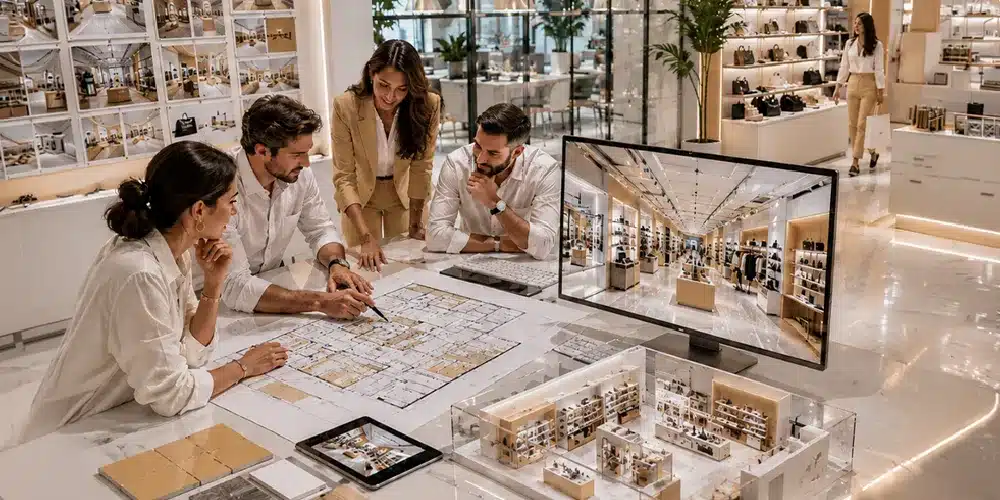
1. The Deep-Dive Consultation
Shop Pros rejects the standard brief. Instead of asking what a client wants, the team uncovers what the business actually needs by identifying friction points in the current customer journey.
- The Difference: They separate themselves from typical agencies by analyzing why people are leaving without buying.
- The Goal: Moving from a “wish list” to a strategic blueprint that addresses hidden revenue leaks.
2. Concepts Built to Perform
The agency doesn’t design for aesthetic approval, it designs for behavioral performance. By aligning spatial layout with business strategy, Shop Pros ensures the floor plan acts as a silent salesperson.
- The Logic: Every design choice is backed by retail science to guide customer movement toward high-margin zones.
- The Result: A space that reflects the brand’s identity while maximizing the commercial potential of every square foot.
3. Strategic 3D Visualization
To eliminate the risk of the “unknown,” the agency provides hyper-realistic 3D walkthroughs. This allows stakeholders to experience the store’s flow and lighting before construction begins.
- The Focus: They prioritize how the environment will influence customer psychology rather than just showing pretty colors.
- The Value: Clients see exactly how the store will drive engagement, ensuring total alignment between vision and reality.
4. Material & Experience Mapping
Shop Pros understands that retail is a sensory game. They select materials based on “perception mapping” choosing textures and finishes that elevate the brand’s perceived value the moment a customer touches them.
- The Detail: Materials are chosen for durability and tactile appeal, ensuring the store feels premium at every touchpoint.
- The Impact: Every surface is an intentional choice designed to evoke a specific emotional response from the shopper.
5. Execution Without Compromise
Recognizing that most designs fall apart during the build phase, Shop Pros maintains a hands-on approach to the fit-out. They bridge the gap between the architect’s desk and the retail floor.
- The Accountability: As a full-service agency, they ensure that the technical complexities of the build never dilute the original strategic vision.
- The Guarantee: What was promised in the 3D render is what is delivered on the site, ready for the first customer to walk through the door.
Frequently Asked Questions
Q1. How do I know if my store problem is design-related or operational?
If customers are coming but not buying, or asking basic navigation questions, it’s rarely operations, it’s usually a design friction issue affecting their journey.
Q2. How does a retail design agency actually increase my sales or just make the store look better?
A well-planned store can directly improve conversions. Studies show redesigns can increase sales by up to 20% over time by improving customer experience and dwell time.
Q3. My store already looks good, do I still need a retail ?
Looking good isn’t enough. Even visually appealing stores lose revenue if layout, product placement, and flow are not optimized 91% of stores in India leak revenue at the shelf level.
="">Q4. How long does it take to redesign a retail store properly?
A strategic redesign isn’t rushed, it typically takes a few weeks from concept to execution, depending on complexity and how deeply you’re reworking the experience.
Q5. Is retail design really important in today’s online-first world?
More than ever. Physical stores now compete on experience, and design directly influences how customers perceive, explore, and decide to buy.
Q6. What’s the biggest mistake brands make with retail design?
Designing themselves instead of customers, ignoring behavior patterns, which leads to confusion, shorter visits, and lost sales opportunities.
Conclusion
The real shift happens when you stop thinking of your store as a space and start treating it like a strategy. That’s where transformation begins. A well-designed store doesn’t just hold products, it guides decisions, builds trust, and quietly converts intent into revenue. And once you see it that way, you don’t just redesign your store, you redesign how your business performs.
Most brands don’t fail because of bad products, they fail because their stores stop evolving while their customers do. What once worked becomes invisible. Layouts that felt “fine” start creating friction. And slowly, without any dramatic signal, performance drops. Retail design is no longer a one-time effort, it’s a living system that needs to adapt as your brand grows and your customers change.